Contact

Please get in touch. We will be pleased to assist you.

Go to contact form

Newsletter

+49 89 68004 - 0
(Mon. to Fri., 8:00 am to 5:00 pm)

kontakt@pcs.com

PCS Locations

Service & Repair

Device Repair Order Form

Transpondertest-Form

+49 89 68004 - 666
Mon. to Thurs., 8:00 am to 5:00 pm
Fri., 8:00 am to 4:00 pm

Questions about software: software-support@pcs.com

Questions about hardware /
other questions:
support@pcs.com

Our partner

PCS works with approximately 100 software and system house partners from all over the world. They offer security solutions based on INTUS products and addressing all areas of production data collection and security technology.

Solution partner

Installation partner

Career

We are constantly looking for new, committed colleagues to strengthen our team.

Career page

Contact
Andrea Scholz
Personalreferentin Recruiting

+49 89 68004 - 0

Projektplanung mehrere Seiten Papier verstreut auf Tisch

Physical Access Management for Enterprises: How to Build a Clear Access Authorization Framework

Not every door within a company needs to be accessible to everyone: production employees are often permitted to enter only designated manufacturing areas, external service providers generally require time-limited access rights, and visitors are granted access to selected areas. As an organization grows, managing these access rights can quickly become complex.

Companies define which individuals are permitted to enter which areas through clear physical access rules. These rules provide the organizational foundation for implementing physical access control.

This article explains how enterprises can establish clear physical access rules and use them to develop a robust access authorization framework.
 

What Are Physical Access Rules and What Purpose Do They Serve?

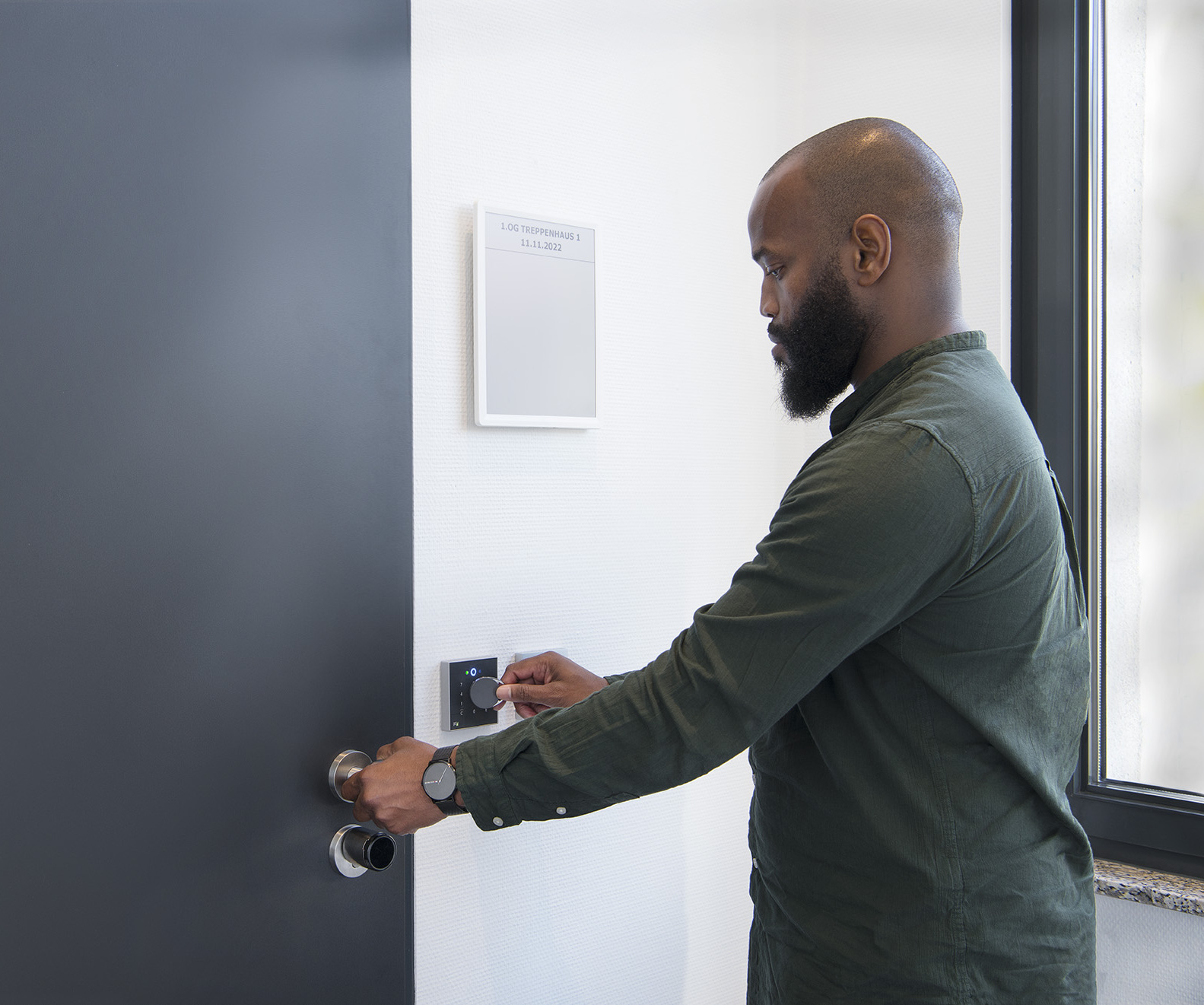
Männliche Person bedient Zutrittsleser mit RFID-Medium

Physical access rules define which individuals or groups of people are permitted to enter specific areas within an organization. They set out the organizational requirements on which access rights are assigned and subsequently implemented through technical systems. 

In simple terms: They define who is granted access, when, where and for what purpose – while the physical access control system enforces these rules technically.


Why Businesses Need Clear Physical Access Rules

As an organization grows, the requirements for managing physical access rights become increasingly complex. New employees join the company, departments expand, additional sites are opened, and external service providers need to be integrated into existing processes.

Without clear physical access rules, permissions may accumulate over the years without being reviewed or updated regularly. This can result in a fragmented and confusing structure in which it is no longer clear who has access to which areas or why those permissions were originally granted.

Clear physical access rules help organizations to: 

  • define responsibilities clearly
  • assign access rights according to consistent rules
  • protect sensitive areas effectively
  • prevent excessive permissions and outdated access rights
  • simplify regular access-right reviews

The more clearly access rights are defined, the easier they are to manage and adapt as requirements change.


How Physical Access Rules Are Translated into an Access Authorization Framework

Physical access rules initially define the fundamental requirements: who should be granted access to which areas, and for what reason? The access authorization framework translates these requirements into a practical structure for day-to-day operations.

Rather than assessing each individual separately, people are assigned to roles or user groups. These roles are then linked to specific areas, time profiles and approval processes. This makes it possible to understand why an access right was granted and who is authorized to modify or revoke it.

ComponentKey questionExample
RoleWho requires access?Production employees, IT staff, reception personnel or external service providers
AreaWhich areas require access?Offices, warehouses, production areas or server rooms
ResponsibilityWho is authorized to grant or modify access rights?Department managers, HR or security personnel
Period of validityHow long should the access right remain valid?Indefinitely, for the duration of a project or for a single visit

A well-designed access authorization framework prevents access rights from being granted arbitrarily or retained indefinitely on an informal, ad hoc basis. Instead, it establishes clear rules that can be documented, reviewed and systematically adapted when organizational requirements change.


Which Areas Require Different Physical Access Rules?

Not all areas within an organization have the same physical access requirements. While some areas are used by large numbers of employees or visitors, others contain sensitive information, critical systems or essential operational processes. 

The following examples illustrate typical areas within an organization and explain why different physical access rules may be appropriate.

Reception & visitor areas
Personen stehen an Empfang
  • manage visitor flows
  • define designated access areas

Benefit: Clear guidance for visitors.

Office areas
Compact time recording terminal for RFID badges for modern employee flexitime systems.
  • protect workspaces
  • separate internal areas

Benefit: Protection of sensitive information and documents.

Warehouse & logistics areas
Person betritt Lagerraum mittels Zutrittsleser INTUS 620
  • secure inventory
  • control delivery processes

Benefit: Greater transparency across material flows.

Production areas
Das spritzwassergeschützte Terminal INTUS 5320 lässt sich auch in schwierigen Umgebungsbedingungen für Zeiterfassung, Projektzeiten oder BDE nutzen.
  • support operational processes
  • take safety requirements into account

Benefit: Access rights tailored to the specific area of operation.

Server rooms, technical areas & archives
 INTUS 1600PS Palm vein reader at the entrance to the data center
  • protect critical systems
  • safeguard confidential data

Benefit: A higher level of protection for sensitive areas.


Would you like to clearly define who can access which areas and when?

We support you in developing clear physical access rules and implementing a suitable access control solution.

Contact us today.


Which people require which physical access rights?

People require access to company areas for different reasons. Physical access rights should therefore not be granted on a blanket basis, but should reflect each person’s actual access requirements.

A structured access authorization framework takes different user groups and their specific requirements into account. This ensures that individuals receive exactly the access rights they need to perform their duties.

Regular access requirements

Typical user groups: Employees, teams, shift groups

People with a permanent workplace generally require regular access to the areas in which they perform their day-to-day duties. Their access rights are based on their role, area of work or shift pattern. 


Task-related access requirements

Typical user groups: HR, IT, production, logistics 

Some areas may only be accessed by individuals who perform specific tasks or hold particular responsibilities there. Access rights are therefore based on the individual’s role within the organization.

Temporary access requirements

Typical user groups: Visitors, suppliers, service providers

Not all access rights need to be granted permanently. Visitors, external service providers and project partners often require time-limited permissions based on the purpose, duration of the assignment or length of the visit.  


Cross-site access requirements

Typical user groups: Managers, service technicians, mobile employees  

In organizations with multiple sites, some individuals require access to several buildings or operational areas. Consistent rules make it possible to manage these permissions centrally while still accommodating local requirements relating to buildings, departments, shifts or security zones.


Data protection and auditability in physical access management

Clear physical access rules help organizations manage permissions transparently and support organizational data protection measures.

Documentation

  • overview of existing physical access rights
  • traceable assignment of access rights
  • transparency regarding changes and approvals

Benefit: A clear overview of who has access to which areas.


Responsibilities

  • defined responsibilities for requesting and approving access rights
  • clear processes for modifying access rights
  • consistent decisions regarding physical access rights

Benefit: Access rights are managed in a controlled and transparent manner.

Regular review

  • identify excessive access rights
  • remove outdated physical access rights
  • take organizational changes into account

Benefit: Only access rights that are genuinely required remain active.


Data protection

  • support the protection of personal data
  • consider how physical access data is handled
  • review retention periods and data access permissions

Benefit: Data protection requirements are taken into account when managing physical access rights.


Key components of structured physical access management

Clear physical access rules are not created through individual permissions alone, but through the interaction of various organizational and technical components. The following elements help organizations manage physical access rights transparently and implement them securely.

DEXIOS
Software DEXIOS Alarmmanagement Ansicht auf Screen

DEXIOS is our modern software solution for time and attendance and access control.

Explore the platform
Access control manager
Zutrittskontrollmanager INTUS ACM80e Produktansicht

INTUS ACMs control connected readers and door contacts.

View products
Access control readers
Zutrittsleser INTUS 700touch in Frondansicht

We offer the right access control readers for every installation type and application.

View products
Door terminals & electronic door cylinders
Digitalzylinder INTUS Flex schräge Ansicht

With INTUS Flex, we offer versatile mechatronic locking systems.

View products
Identification media
Identmedien Karten und Tags verschiedene Ausführungen

PCS offers a wide range of RFID cards and transponders for time and attendance and access control.

View products


How to establish physical access rules step by step

Effective physical access rules are usually developed in several stages. The aim is to systematically identify areas, user groups and responsibilities and use this information to create a structured access authorization framework.

1. Identify areas and doors
Which buildings, rooms or zones need to be subject to access restrictions?

2. Define user groups
Which employees, visitors, service providers or other external individuals require access?

3. Define roles and access rights
Which roles require access to which areas, and for what reason?

4. Assign responsibilities
Who is authorized to request, approve, modify or revoke access rights?

5. Define time-based rules
Which access rights are permanent, temporary or limited to specific periods?

6. Schedule regular reviews
Which access rights need to be reviewed or updated regularly?


Conclusion

Effective physical access control does not begin at the door, but with the rules behind it. Clear physical access rules define which individuals are permitted to enter which areas and provide the foundation for a structured access authorization framework.

Only then are these organizational requirements implemented through technical solutions, such as electronic access control systems, ID cards, transponders, mobile credentials or centralized access control software. The key requirement is that the technical access control system can reliably reflect the previously defined roles, areas, time profiles and approval processes.

The more clearly physical access rights are defined, the easier they are to manage, adapt and monitor over the long term. This creates a structured approach to physical access management that not only supports security, but also establishes clear processes and auditable access rights in day-to-day operations.

Our access control expert

PCS Systemtechnik - Zeit und Zutritt
Mitglied der Geschäftsleitung Daniel Berning

Daniel Berning

Head of Product Management for INTUS Systems and Technologies

View expert
PCS Systemtechnik - Zeit und Zutritt